Escrow is supposed to be the boring part. You've already negotiated, already inspected, already picked out where the couch goes. Then the title company sends over the preliminary tax bill, and there's a line item nobody mentioned during the showing. Add it to your base property tax and the number you budgeted for just changed, sometimes by a few hundred dollars a month.
That line item is Mello-Roos, and in Temecula it isn't the exception. It's woven into most of the subdivisions built after 1990, which by now means most of the city. The mistake buyers make isn't failing to notice it exists. It's assuming that because the list prices on two homes are close, the actual cost of owning them is close too. It often isn't, and the gap is hiding in a number the listing site never shows correctly.
The Tax Estimate on the Listing Isn't the Number You'll Pay
California caps the base property tax rate at 1% of a home's purchase price under Proposition 13, and most listing tools display something close to that, usually rounded up slightly to account for small voter-approved bonds that apply almost everywhere. That's the number that looks reassuring on paper. It's also incomplete for a large share of Temecula's housing stock.
Here's the math that actually determines your payment. Take a home priced at $775,000 sitting inside a Community Facilities District with a $3,200 annual Mello-Roos assessment. Add that to a base tax running around 1.1%, and the effective rate lands closer to 1.5%. A comparable home nearby with no CFD stays at that 1.1%. On paper, the two homes might look like the same purchase. On your mortgage statement, they aren't. Stack a heavier CFD on top of an amenity-rich HOA, which happens in several of Temecula's newer master-planned communities, and the effective rate can climb toward 1.9% or higher.
That difference doesn't show up when you're comparing list prices. It shows up in the number you actually get to keep out of your monthly budget for everything else.
Same List Price, Different Bill
The pattern across Temecula is consistent enough to plan around: newer means higher, and prestige amenities tend to get funded twice, once through the CFD and again through the HOA.
| Community Type | What Typically Drives the Bill | What You're Paying For |
|---|---|---|
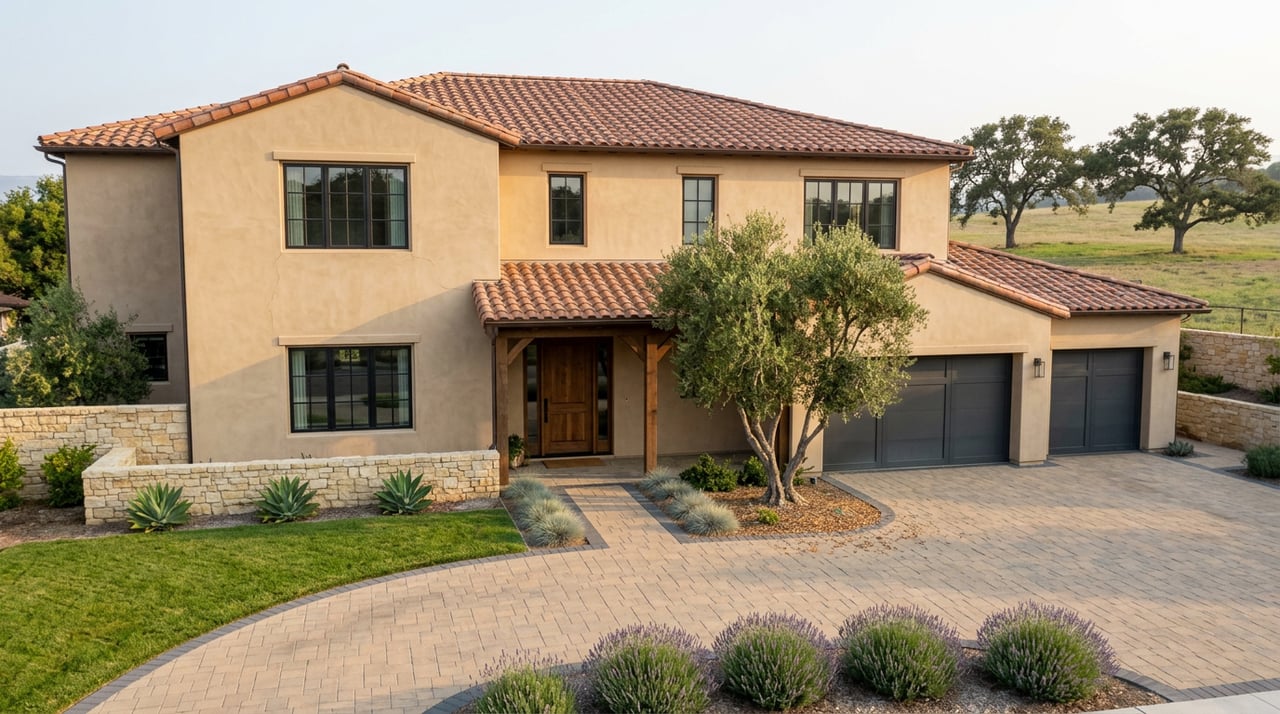
| Newest master-planned communities (built roughly since the 2010s) | Sits at the top of the post-1990 Mello-Roos range, often layered with a higher monthly HOA | Resort-style clubhouses, pools, trail systems, and the infrastructure that built the neighborhood from scratch |
| 2000s-era gated communities still completing build-out | Mid-to-upper range, sometimes multiple active CFDs on a single parcel as later phases get added | Gated access, community amenities, ongoing infrastructure tied to the newest phases |
| Established 1990s tracts | Consistently the low end of the post-1990 range | Mature landscaping, lower HOA dues, infrastructure that's largely paid down |
| Pre-1990 neighborhoods near Old Town and older rural-residential pockets | Frequently no Mello-Roos at all | Older housing stock, larger lots in some pockets, and a tax bill that stays closer to the advertised 1% |
The range for homes built after 1990 generally runs from about $1,000 to $3,700 a year, with the newest premium communities at the top and the older 1990s tracts anchoring the bottom. Homes built before 1990, and much of Wine Country, often pay nothing into a CFD at all.
Why Newer Neighborhoods Carry the Heaviest Load
This isn't a pricing quirk. It's a direct consequence of how California pays for growth.
Temecula didn't exist as an incorporated city until 1989, seven years after the Mello-Roos Act became law. The city grew from roughly 27,000 residents in 1990 to more than 110,000 today, and Proposition 13 made it structurally impossible to raise the base tax rate fast enough to fund that growth with ad valorem taxes alone. So cities and school districts turned to Community Facilities Districts instead: a way to bond against a subdivision's future tax revenue to build the schools, fire stations, roads, and sewer capacity before a single resident moves in.
The City of Temecula's own debt management records list the districts by name: Harveston II CFD 03-06, Wolf Creek CFD 03-03, Crowne Hill CFD 03-01, Roripaugh Ranch CFD 03-02 and its Phase 2 successor CFD 16-01, Municipal Services CFD 19-01, Heirloom Farms CFD 20-01, Altair CFD 23-01, and Prado CFD 23-02. On top of those subdivision-specific districts, Temecula Valley Unified School District administers two district-wide CFDs of its own, commonly referenced as CFD 88-12 and CFD 2002-2, which funded school construction across the valley. That layering is exactly why some homes end up paying into two or three separate Mello-Roos assessments on a single tax bill. It isn't double billing. It's two different agencies that both needed to build something before the neighborhood existed.
Where Mello-Roos Doesn't Follow You
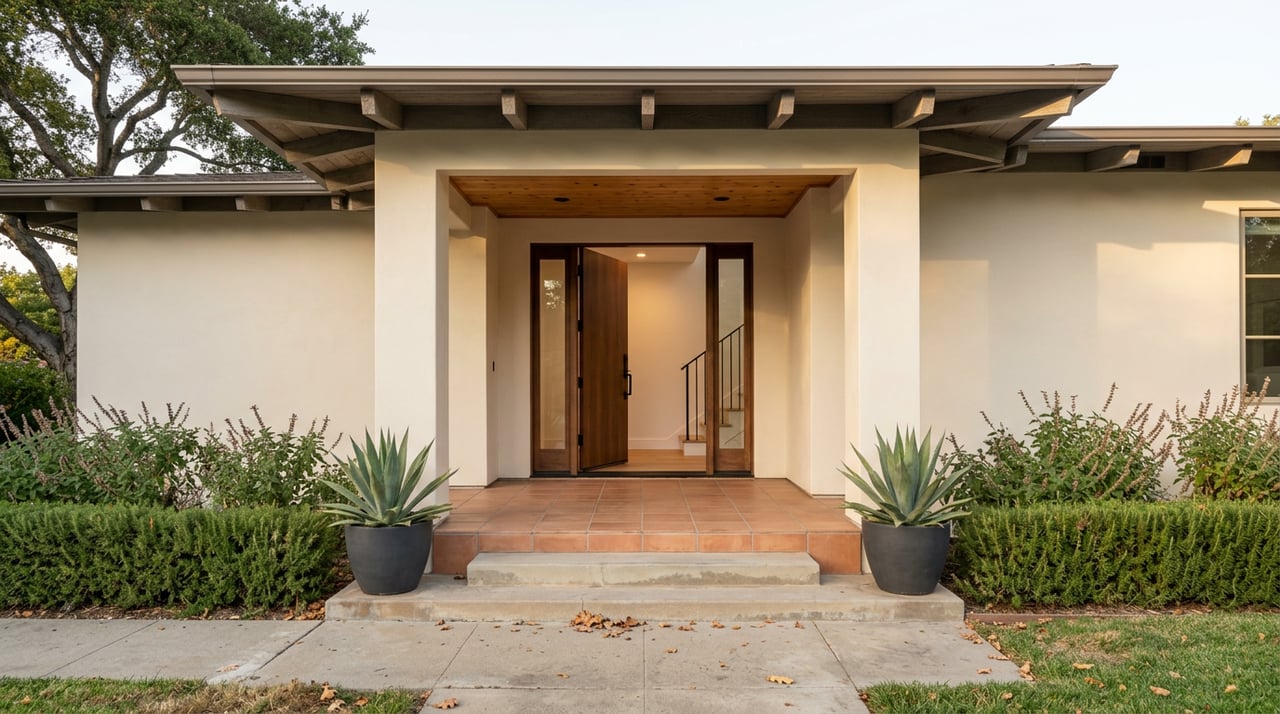
If avoiding it entirely matters more to you than avoiding an older floor plan, the answer lives almost entirely in Temecula's pre-2000 footprint. Older craftsman and ranch-style homes near the historic Old Town district predate the city's incorporation and typically sit outside any CFD boundary. Meadowview, an established equestrian community with larger lots and older housing stock, carries minimal or no Mello-Roos. Los Ranchitos, with its rural-residential, one-acre-plus parcels, is typically free of it too, though individual properties can vary enough that it's worth confirming on any specific address rather than assuming.
The trade-off is real: you're generally choosing an older home over a newer one, and in some of these pockets, larger lots over walkable amenity packages. That's a legitimate trade to weigh, but it's a trade, not a loophole.
Four Things to Pull Before You Write an Offer
- Look up the parcel's Special Assessments directly. Riverside County's tax records break out each CFD as its own line item under the parcel's Special Assessments or Direct Assessments section. Add the lines together for the true annual total rather than trusting a single summary figure.
- Ask for the Rate and Method of Apportionment on every active CFD. The RMA shows the annual escalator, meaning how much the assessment is allowed to increase each year, and the bond's maturity date, meaning when it's scheduled to end.
- For new construction, confirm the required disclosure landed before you signed. California law obligates the builder to disclose Mello-Roos before the purchase contract is finalized. Read the total annual amount, the escalator cap, and the maturity year before you sign anything.
- For a resale, don't assume disclosure happened automatically. New subdivisions require a formal Public Report; resales don't carry that same automatic paperwork trail, so confirming the current CFD status often takes an extra step your agent should be doing on your behalf, not you finding out at the title company.
Mello-Roos isn't based on your home's assessed value. It's typically a fixed annual assessment tied to square footage or lot frontage, which means it doesn't shrink if the market softens and it doesn't disappear just because the mortgage does.
Quick Answers
Does Mello-Roos ever go away? Eventually, yes. Most bonds are structured to mature over 20 to 40 years from when the district formed. Some of Temecula's earliest CFDs are getting closer to that horizon, but plenty of the newer ones, including districts formed in the last few years, have decades left. Don't buy expecting early relief.
Is it tax deductible? Generally, no. Standard property taxes based on assessed value are deductible subject to the SALT cap, but Mello-Roos isn't an ad valorem tax, so the portion funding new construction typically isn't deductible. A partial exception exists if part of the assessment covers ongoing maintenance or interest rather than new infrastructure, which is worth a conversation with a tax professional on a specific property.
Will it affect what I can qualify for? Yes. Lenders count Mello-Roos in your debt-to-income ratio the same way they count your mortgage payment and HOA dues. A $3,600 annual assessment adds about $300 a month to that calculation, which can shrink your approved purchase price on a different home even if the sticker prices look similar.
Reported median prices across Temecula this year illustrate the same lesson from a different angle. Over the three months ending May 2026, homes sold at a median of about $746,000, while other trackers using different time windows and property mixes put the figure closer to $775,000 or even $839,000 for June alone. None of those numbers are wrong. They're measuring different slices of a market that stretches from starter condos near Old Town to wine country estates past Butterfield Stage Road. The median price tells you almost nothing about what a specific address will actually cost you each month. The effective tax rate does.
If you're comparing two Temecula listings right now and the Mello-Roos picture isn't clear on either one, that's exactly the kind of research The Ashley Cooper Team runs before you write an offer, not after you're already in escrow. And if part of your plan involves selling your current home first, our free home valuation is a useful place to start figuring out where you actually stand.